
The US Economy Is Slowing: Key Signals Investors Should Watch Now

The US Economy Is Slowing: Key Signals Investors Should Watch Now

The US Economy Is Slowing: Key Signals Investors Should Watch Now
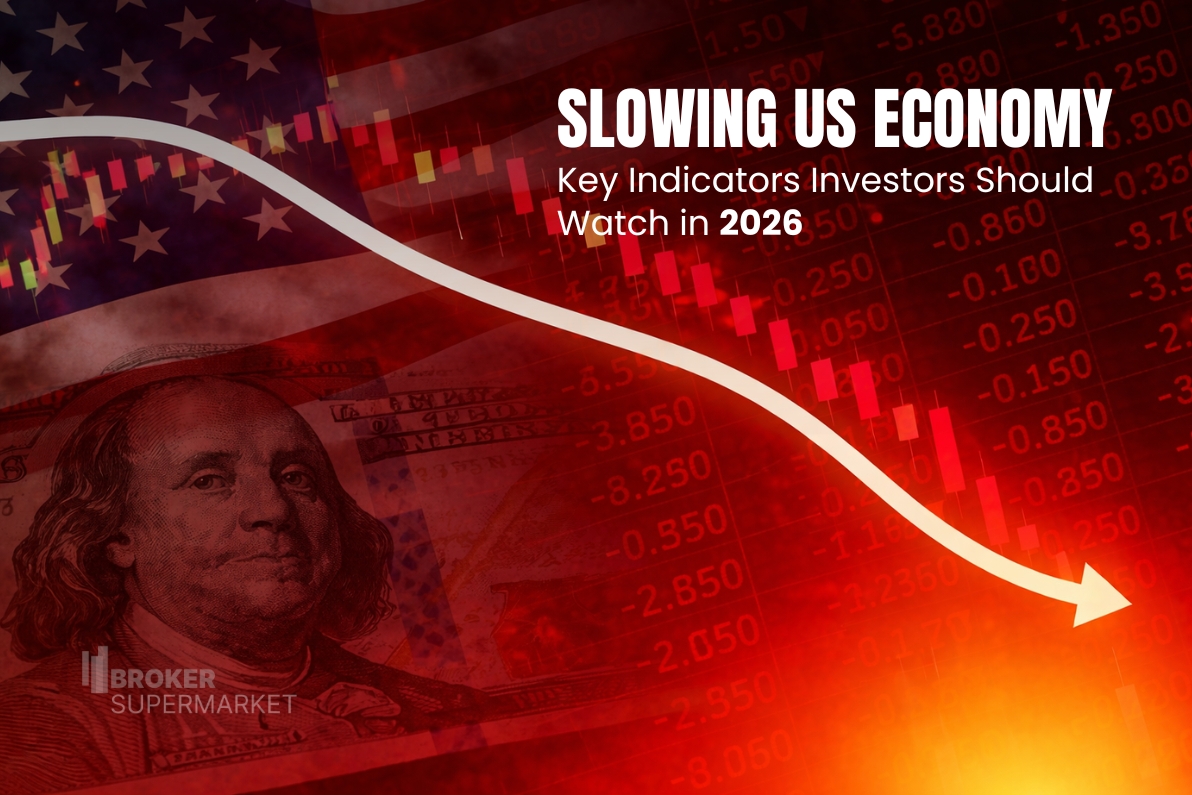
Economic data, market movements, and policy expectations are currently sending a clear but complex message: the US economy is still expanding, but the pace of growth is slowing and risks are increasing. This is not a recession signal yet, but it is a warning phase where several indicators are starting to weaken at the same time.
A Real-Time View of the Economy
One of the most useful ways to track the US economy in real time is through business activity data from both manufacturing and services sectors. Recent data shows that overall business activity continues to expand, but at a slower pace than before.
The latest readings show that business activity has declined slightly from the previous month, indicating that while companies are still growing, demand is not as strong as it was earlier. At current levels, economic growth is estimated to be around 1.3%, which is considered slow growth rather than a strong expansion.
This tells us that the US economy is not contracting, but it is clearly losing momentum.
Cost Pressures Are Rising Again
Another important trend is the rise in business costs. Companies are experiencing higher input costs, and many businesses are passing these costs on to customers through higher prices. Cost pressures have increased significantly in recent months, with input prices rising at the fastest pace in many months and selling prices rising at the fastest rate in several years.
A major reason for this trend is higher energy prices. When energy costs increase, it affects transportation, manufacturing, and operational expenses across multiple industries. This creates inflation pressure across the economy and reduces overall purchasing power.
Inflation is therefore expected to move closer to 4% in the near term due to these cost pressures.
The Labor Market Is No Longer Improving
The labor market has been one of the strongest parts of the US economy over the past year. However, recent data shows early signs of weakness, with employment levels declining for the first time in about a year.
This is an important shift because job growth supports consumer spending, and consumer spending is a major driver of economic growth. If employment growth slows further, it could lead to weaker economic activity in the coming months.
This is also one of the key reasons why interest rates may not increase further, and there is a possibility of rate cuts later in the year if the labor market continues to weaken.
The Three Main Forces Affecting the Economy
At the moment, the direction of the US economy is being influenced by three major forces:
- Energy prices – Higher oil prices increase costs and reduce demand over time
- Interest rates and bond yields – Higher borrowing costs slow business investment and consumer spending
- Employment trends – Slower job growth leads to slower spending and weaker growth
When these three factors happen at the same time, the economy typically shifts from strong growth to slower growth.
What This Means for Financial Markets
Financial markets usually react to future expectations rather than current conditions. Historically, markets tend to recover before the economy fully improves because investors start pricing in future recovery.
For markets to stabilize and recover, two indicators are especially important to monitor:
- Oil prices
- Government bond yields
If energy prices begin to fall and bond yields begin to decline, it would indicate easing pressure on the economy and could support a recovery in financial markets.
What This Means for US Stock Market Indices
Since this data reflects the US economy, it is important to understand the impact on major US stock market indices such as the S&P 500, Nasdaq, and Dow Jones.
Stock markets are closely linked to economic growth and corporate earnings. When the economy grows strongly, company revenues and profits typically increase, which supports higher stock prices. However, when the economy slows, corporate earnings growth may also slow, which can put pressure on stock market indices.
In simple terms:
- Strong economy → Higher corporate earnings → Stock markets tend to rise
- Slow economy → Slower earnings growth → Stock markets may face pressure or volatility
This is why investors closely monitor economic indicators, because a slowing US economy can lead to weaker performance in major indices such as the S&P 500.
The Current Phase of the Economy
Based on current data, the US economy appears to be in a transition phase:
- Growth is positive but slowing
- Inflation pressures are increasing due to higher costs
- The labor market is starting to soften
- Interest rates may decline later if growth weakens further
This phase can be described as a slow growth or “warning” phase, where the economy is still expanding but facing multiple headwinds.
Conclusion
The overall economic data suggests that the US economy is not in a recession, but it is no longer in a strong growth phase. Rising costs, high interest rates, and early signs of labor market weakness are slowing the pace of growth.
Investors and businesses should focus on key indicators such as business activity data, oil prices, bond yields, inflation, and employment trends to understand where the economy is heading next.
The coming months will be important in determining whether the economy stabilizes and returns to moderate growth or slows further. Monitoring these indicators will provide early signals of the next major move in both the US economy and major US stock market indices.
September 16, 2026 09:12:38am

September 08, 2026 06:57:20am

September 02, 2026 08:40:28am

July 23, 2026 05:50:18am
February 14, 2025 05:07:00am
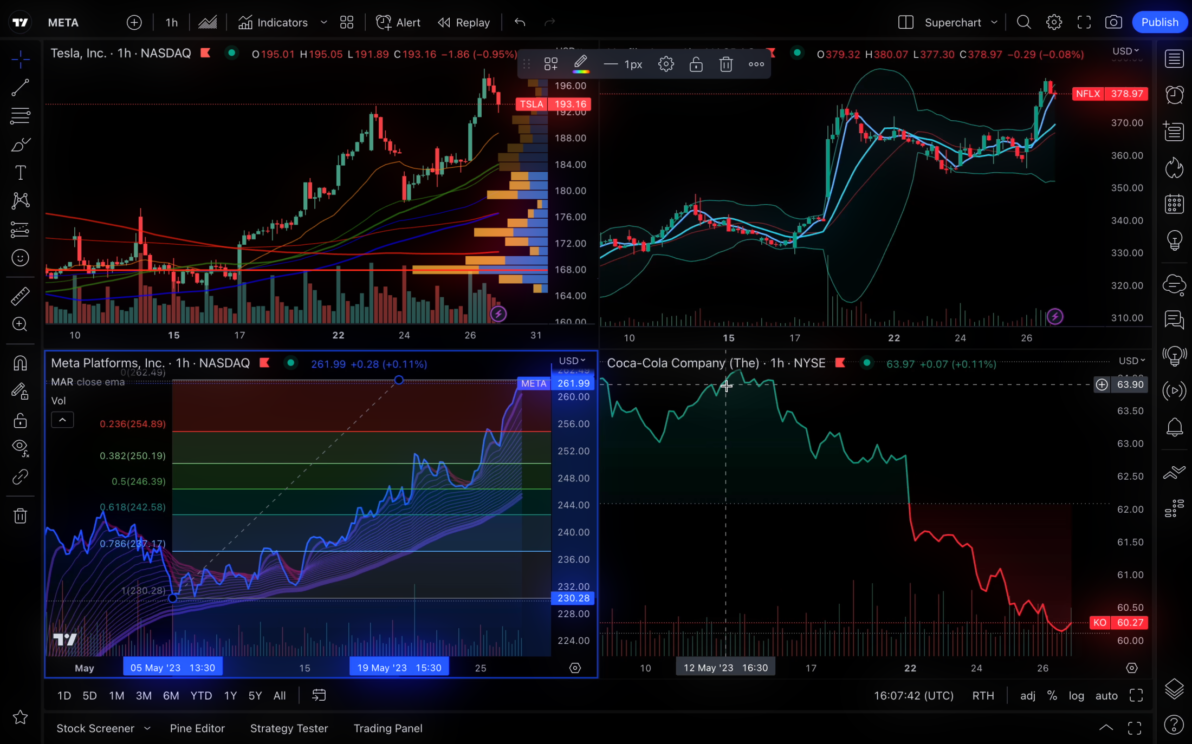
TradingView is a highly popular financial charting platform that caters to trade...
August 27, 2026 10:22:44am

August 19, 2026 12:24:43pm

August 12, 2026 07:33:28am
 en
en es
es th
th vi
vi zh
zh