
Markets at Record Highs — But Are They Looking Back Instead of Forward?

Markets at Record Highs — But Are They Looking Back Instead of Forward?

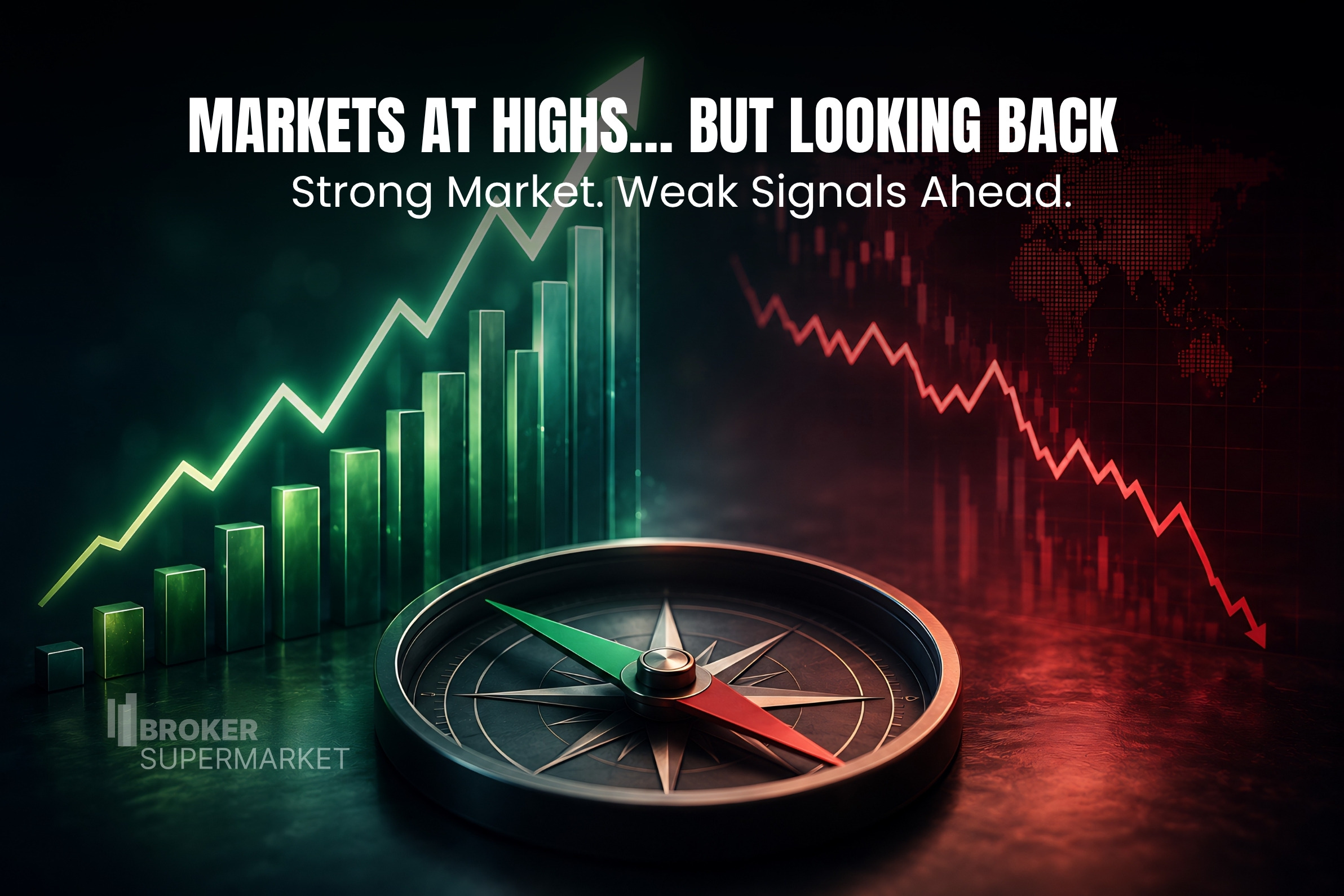
The stock market has delivered an impressive performance.
Major indices have reached new highs, supported by strong earnings and encouraging economic data. On the surface, everything appears positive — growth is steady, profits are strong, and investor confidence is high.
But there’s a critical question traders need to ask:
Are markets reacting to what has already happened… instead of what’s coming next?
A Strong Market — Driven by Past Data
Recent gains have been broad-based, with both large and small-cap stocks contributing to the rally.
Economic data has also supported the positive sentiment:
- Growth has improved compared to previous quarter
- Consumer activity appears stable
- Inflation figures have come in close to expectations
However, there is an important detail often overlooked.
👉 Much of this data reflects conditions from earlier months — not the current environment.
This means markets may be pricing in a reality that no longer fully exists.
New Challenges Are Emerging
While the market celebrates recent strength, several forward-looking risks are beginning to build.
- Energy prices are rising sharply
- Interest rates are moving higher
- Inflation pressures are increasing again
These factors tend to impact both businesses and consumers over time.
Higher energy costs, for example, don’t just affect fuel prices — they influence transportation, production, and overall living expenses.
For traders, this signals that conditions ahead may be more difficult than recent data suggests.
Growth Is Becoming Less Balanced
Although overall economic growth has improved, the composition of that growth is changing.
Some of the recent expansion has been driven by:
- Investment in emerging technologies
- Government-related spending
At the same time, the role of the consumer — the largest contributor to economic activity — is starting to weaken.
This shift is important.
👉 Growth supported by temporary or concentrated factors is less sustainable than broad-based expansion.
Consumer Strength Is Starting to Fade
Consumer spending has shown signs of slowing when adjusted for inflation.
While overall spending levels may appear strong, a closer look reveals that much of the increase is linked to higher prices — especially in energy-related categories.
In real terms:
- Spending growth is modest
- Purchasing power is under pressure
- Future consumption may weaken
For markets that rely heavily on consumer activity, this is a key concern.
Inflation Is Moving in the Wrong Direction
Another area to watch is inflation.
Recent data shows that core inflation is no longer easing — instead, it is beginning to trend higher again.
This creates a more challenging environment because:
- Interest rates may remain elevated
- Borrowing costs stay high
- Economic growth faces additional pressure
Markets have largely remained optimistic despite these signals.
But the direction of inflation matters more than the level itself.
Are Markets Ignoring Forward Risks?
Perhaps the most important takeaway is the gap between market behaviour and forward-looking indicators.
Investors are focusing on:
- Strong past earnings
- Positive recent data
But paying less attention to:
- Rising costs
- Slowing consumption
- Ongoing global uncertainty
This creates a situation where markets are, in effect, “looking in the rearview mirror” — reacting to what has already happened rather than what lies ahead.
What This Means for Traders
For traders, this environment requires a shift in approach.
Rather than relying solely on recent trends, it becomes important to consider how conditions may evolve.
Key factors to monitor include:
- Energy price movements
- Inflation trends
- Consumer spending patterns
- Interest rate expectations
As these variables change, market direction can adjust quickly.
Why Caution Matters Now
This doesn’t necessarily signal an immediate downturn.
Strong earnings and solid profit margins continue to provide support.
However, the balance of risks is shifting.
👉 Positive data is becoming less forward-looking
👉 Negative trends are starting to build
In such an environment, markets often become more volatile and less predictable.
Trading in a Changing Market
Periods like this highlight the importance of preparation.
Traders benefit from:
- Clear risk management strategies
- Access to reliable platforms
- Flexibility to adapt to changing conditions
Having the right broker and tools becomes especially valuable when market direction is uncertain.
The Bottom Line
Markets are performing well — but much of that strength is based on past data.
Looking ahead, rising costs, inflation pressures, and slowing consumer activity may create a more challenging environment.
This doesn’t mean the trend will reverse immediately.
But it does suggest that the market’s current confidence may not fully reflect what’s coming next.
Final Insight
Markets often move ahead of the economy — but not always in the right direction.
And when prices are driven by yesterday’s data,
the biggest risk lies in what tomorrow might bring.
September 16, 2026 09:12:38am

September 08, 2026 06:57:20am

September 02, 2026 08:40:28am
July 23, 2026 05:50:18am
February 14, 2025 05:07:00am
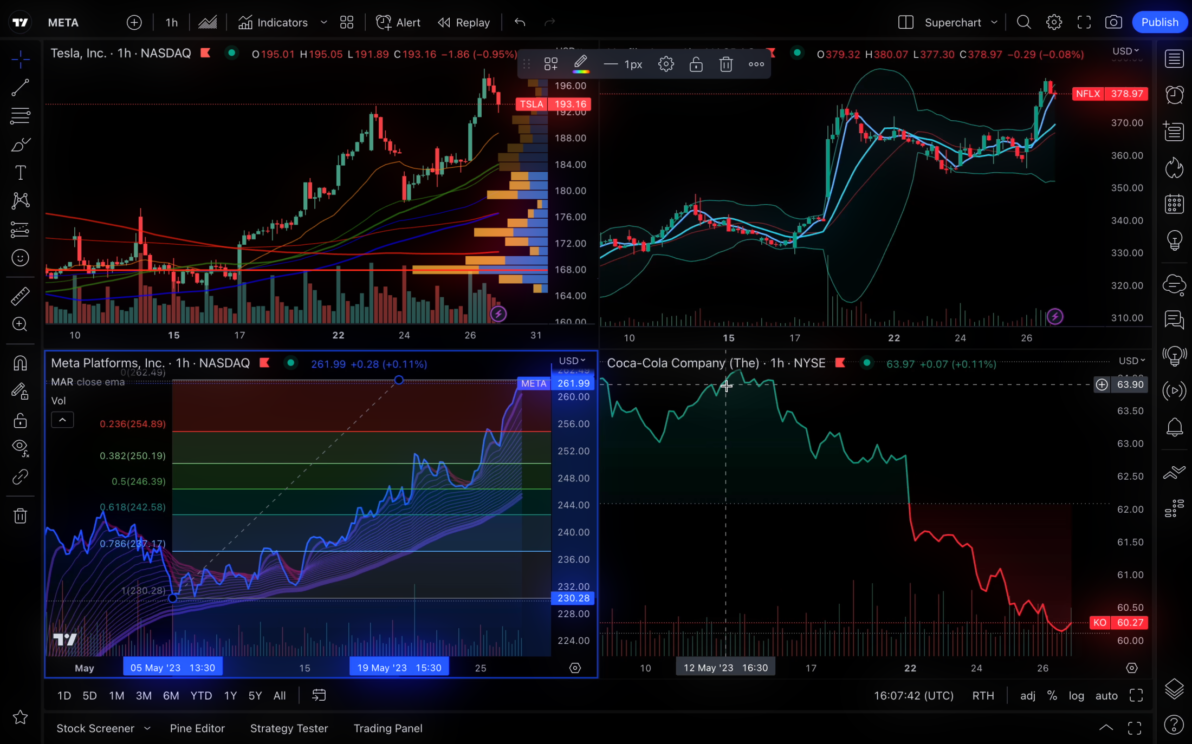
TradingView is a highly popular financial charting platform that caters to trade...
August 27, 2026 10:22:44am
August 19, 2026 12:24:43pm

August 12, 2026 07:33:28am
 en
en es
es th
th vi
vi zh
zh