
Same Market, Different Instruments: What Are You Actually Trading?

Same Market, Different Instruments: What Are You Actually Trading?

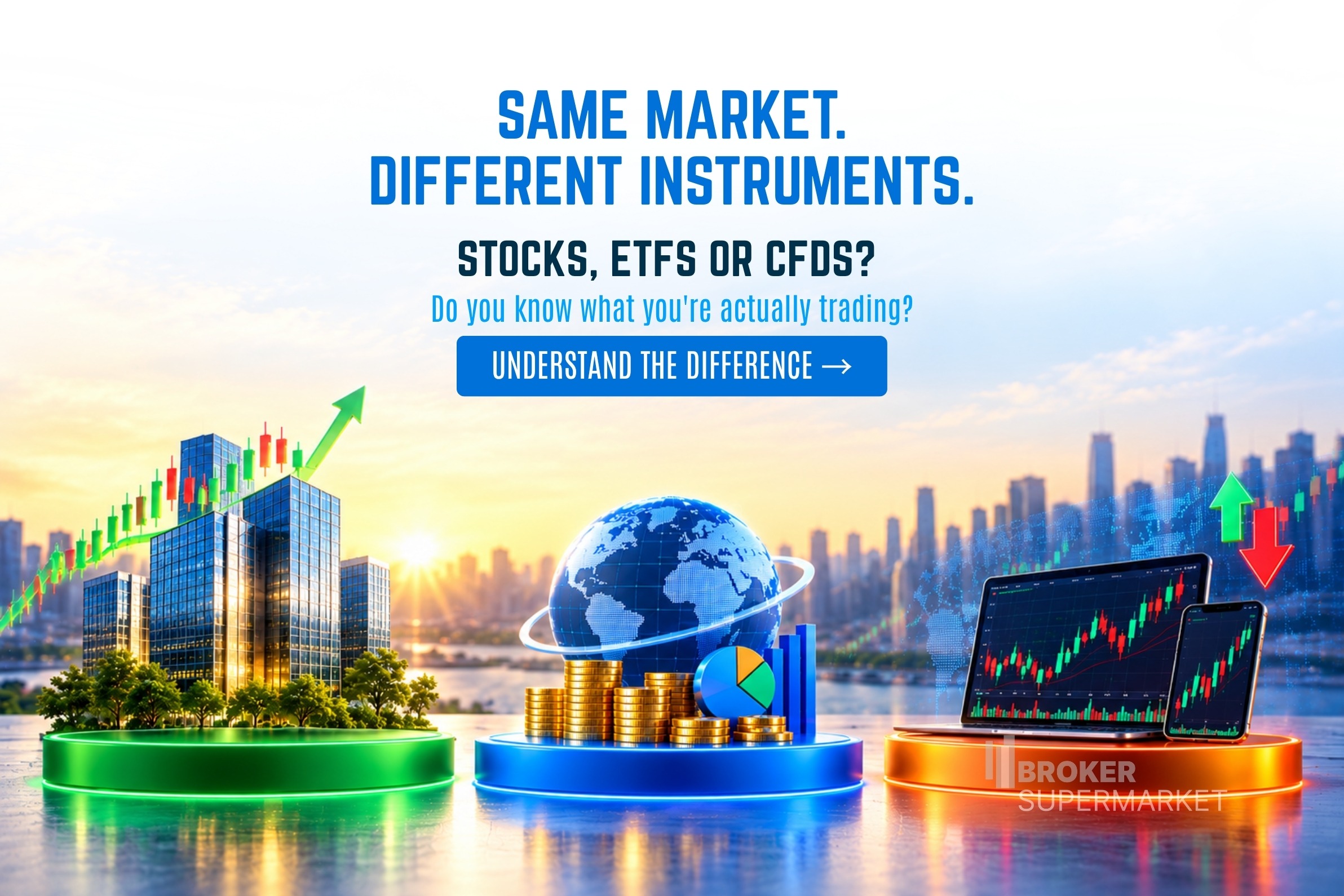
Imagine two people following the same company. Both watch its price, read the same headlines and follow the same market developments. Yet they may be using completely different financial products to gain exposure to that market.
One might purchase shares in the company. Another might invest through an exchange-traded fund (ETF). A third might trade a contract for difference (CFD), where available.
They may be looking at similar price movements, but their financial arrangements are not the same.
This is one of the most overlooked questions in financial markets: are you choosing a market, or do you understand the instrument you are using to access it?
Understanding this distinction can help investors and traders make more informed comparisons, recognise risks and ask better questions before using a financial platform.
1. A Market Is Not the Same as a Financial Instrument
A financial market is where financial assets and instruments are issued, bought, sold or traded. Examples include stock markets, foreign exchange markets and commodity markets.
A financial instrument is the product or contract through which someone obtains a particular financial interest or exposure.
For example, someone interested in the stock market might consider:
-
Individual shares: Represent ownership in a company.
-
Exchange-traded funds (ETFs): Funds traded on an exchange that typically hold a collection of assets or track a defined index, sector or strategy.
-
Contracts for difference (CFDs): Derivative contracts that allow eligible clients to speculate on price movements without owning the underlying asset.
-
Index-related products: Products designed to provide exposure to an index, with their structure depending on the specific instrument.
These are not interchangeable products. Their legal structure, ownership rights, costs, risks and trading conditions can differ considerably.
The key takeaway is simple: knowing which market interests you is only the first step. You also need to understand how your chosen instrument works.
2. One Underlying Market, Different Financial Experiences
Consider a hypothetical example involving a company whose share price changes during the trading day.
Three people want exposure to the company’s performance, but each chooses a different route.
Person A: Buys the company’s shares
Buying shares generally means acquiring an ownership interest in the company. Depending on the share class and applicable terms, shareholders may have voting rights and may receive dividends if declared.
The investor is exposed to changes in the share price and may benefit from long-term price appreciation. However, the share price can also fall, resulting in a loss.
Person B: Invests through an ETF
An ETF may hold shares in multiple companies, track an index or follow another investment strategy.
Rather than selecting only one company, the investor may obtain exposure to a broader group of securities through a single fund. The actual diversification depends on the ETF’s holdings and structure.
ETF investors should consider the fund’s objective, holdings, fees, tracking performance and other relevant risks.
Person C: Trades a CFD
A CFD is a derivative contract whose value is linked to the price movement of an underlying asset or reference price.
A CFD trader generally does not own the underlying shares through the CFD itself. Depending on the contract, the trader may speculate on rising or falling prices.
CFDs can involve leverage, which magnifies the effect of price movements on the trader’s capital. Financing charges, spreads and other costs may also apply. Losses can be substantial, and protections vary by jurisdiction and provider.
These three approaches may relate to the same company, but they create different financial relationships.
The lesson: Similar market exposure does not necessarily mean similar ownership, costs or risk.
3. Five Questions to Ask Before Choosing an Instrument
Before comparing trading platforms or opening an account, it helps to understand the product itself.
1. Do I own the underlying asset?
Ownership is one of the most important distinctions.
Purchasing a share generally gives you an ownership interest in the company. Trading a derivative linked to that share generally does not give you the same ownership rights.
Always check the product’s legal structure and terms rather than assuming that exposure to an asset means owning it.
2. How are the costs calculated?
The cost of accessing a market may extend beyond a visible commission.
Depending on the instrument and provider, costs can include:
-
Bid-ask spreads.
-
Transaction or dealing fees.
-
Fund management expenses.
-
Overnight financing or holding charges.
-
Currency conversion fees.
-
Withdrawal or account-related fees, where applicable.
Not every cost applies to every product. Comparing the relevant charges for the specific instrument can provide a more meaningful picture than looking at a single advertised fee.
3. Does the product use leverage?
Leverage allows a trader to control a larger market position relative to the capital committed.
This can magnify gains, but it also magnifies losses. A relatively small market movement may have a substantial effect on the capital allocated to a leveraged position.
Understand the leverage offered, margin requirements, liquidation rules and potential losses before using such a product.
4. When and how can I trade it?
Different instruments can have different trading hours, settlement arrangements, liquidity conditions and order types.
An exchange-traded product may follow the trading hours of its exchange, while some foreign exchange and derivative markets have different schedules. Holidays, market interruptions and provider-specific conditions can also affect access.
Check the actual product and platform terms instead of assuming that every instrument linked to a market follows the same timetable.
5. What could make the product behave differently from what I expect?
An instrument can introduce risks beyond the price movement of its underlying asset.
For example, an ETF may experience tracking differences. A derivative may involve counterparty risk, financing costs or leverage. An overseas investment may also expose you to currency fluctuations.
Understanding these additional factors can help you identify the difference between the market risk you intended to take and the risks introduced by the product itself.
4. Why This Matters When Comparing Brokers
A broker comparison becomes more useful when you know what you want to access.
Two providers may both advertise access to the stock market, but the actual products available to their clients may differ.
One may offer direct share dealing, while another may focus on derivatives or provide a combination of instruments. Their available exchanges, ETF selection, account requirements, trading platforms and fee structures may also vary.
This means that the question should not simply be, “Which broker offers the stock market?”
A more useful set of questions is:
-
Which specific instruments can I access?
-
Do I own the underlying asset, or am I trading a derivative?
-
What are the total costs for the product I intend to use?
-
Are the relevant markets and exchanges available in my country?
-
What protections, restrictions and account conditions apply?
-
Does the platform provide the information and tools I need to understand the product?
A broker’s product list is only the starting point. The terms attached to each instrument are equally important.
Explore the Broker Super Market broker comparison section to investigate available providers and compare the features relevant to your requirements.
5. Build Your Understanding Before You Build Your Watchlist
Many people begin exploring financial markets by following familiar company names, popular indices or frequently discussed currencies.
That can be a useful starting point, but a watchlist does not explain how a financial product works.
A more informed learning process involves three steps:
Step 1: Understand the market.
Learn what drives the asset or market you are interested in, including its structure, participants and major influences.
Step 2: Understand the instrument.
Determine whether the product represents ownership, a fund investment or a derivative contract. Learn how its value is calculated and what risks it introduces.
Step 3: Understand the provider.
Compare the broker’s available instruments, fees, platform functionality, account conditions and applicable regulatory protections.
Following this sequence can help you avoid comparing products that appear similar but work differently.
If you are building your knowledge, explore the Broker Super Market financial markets section and its learning resources.
6. The Better Question Is Not Just “Where Can I Trade?”
A platform can provide access to a market, but access alone does not explain the product you are using.
Before choosing an instrument, make sure you can answer three questions:
-
What exactly am I buying or trading?
-
How can this product make or lose money, and what will it cost to hold or trade?
-
What additional risks come with this structure?
If those questions remain unclear, more research may be useful before proceeding.
Financial education is not about finding a product that suits everyone. It is about understanding the available choices well enough to recognise their differences and evaluate them against your own circumstances.
Final Thoughts: Look Beyond the Market Name
Stocks, ETFs, Forex, commodities and indices describe different areas of the financial markets. But the instrument used to access a market can be just as important as the market itself.
Two products can follow related prices while offering different ownership rights, costs, risks and trading conditions.
That is why understanding financial instruments should come before assuming that similar market exposure means similar outcomes.
Explore the market. Understand the instrument. Compare the provider.
Visit Broker Super Market to explore financial markets, learn about different instruments and compare broker features.
Disclaimer: This article is for general educational and informational purposes only. It is not financial, investment, legal or tax advice, and it does not recommend any particular instrument or provider. Financial instruments involve different risks, including the possible loss of capital. Derivatives such as CFDs can be complex and carry a high risk of loss, particularly when leverage is involved. Product availability, fees, protections and legal requirements vary by provider and jurisdiction. Always review the relevant product documentation and seek independent professional advice where appropriate.
Frequently Asked Questions
What are financial instruments?
Financial instruments are assets, contracts or financial arrangements that have monetary value or create a financial claim or obligation. Examples include shares, bonds, ETFs and derivatives such as options and CFDs. Their rights, costs and risks depend on their structure.
What is the difference between a stock and an ETF?
A stock generally represents an ownership interest in one company. An ETF is a fund traded on an exchange that may hold multiple securities or track an index, sector or strategy. An ETF’s diversification depends on its holdings and investment objective.
Do CFDs give you ownership of the underlying asset?
Generally, no. A CFD is a derivative contract that provides exposure to price movements without giving the trader ownership of the underlying asset through the contract itself. Its terms, costs and risks differ from those of direct ownership.
Why can two financial products linked to the same market have different costs?
They may use different structures and pricing arrangements. Costs can include spreads, commissions, fund expenses, financing charges and currency conversion fees. The applicable costs depend on the product, provider and account terms.
How do I choose a financial instrument?
Start by understanding the instrument’s purpose, ownership rights, pricing, costs, risks, liquidity and trading conditions. Consider your knowledge, financial circumstances and objectives, and compare the relevant product documentation before making a decision.
Why should I compare brokers before opening an account?
Brokers can differ in the instruments they offer, their fees, platform tools, account conditions, available markets and regulatory protections. Comparing these features helps you understand the service being offered rather than relying only on the broker’s headline claims.
November 13, 2026 06:13:44am
November 04, 2026 09:02:33am
October 29, 2026 14:03:56pm
October 21, 2026 12:16:00pm

October 15, 2026 07:45:28am
August 27, 2026 10:22:44am
August 19, 2026 12:24:43pm

August 12, 2026 07:33:28am
 en
 es
 th
 vi
 zh
