
Market Rebound After Ceasefire: What It Means for Investors Now

Market Rebound After Ceasefire: What It Means for Investors Now

A Sudden Calm Brings Market Relief
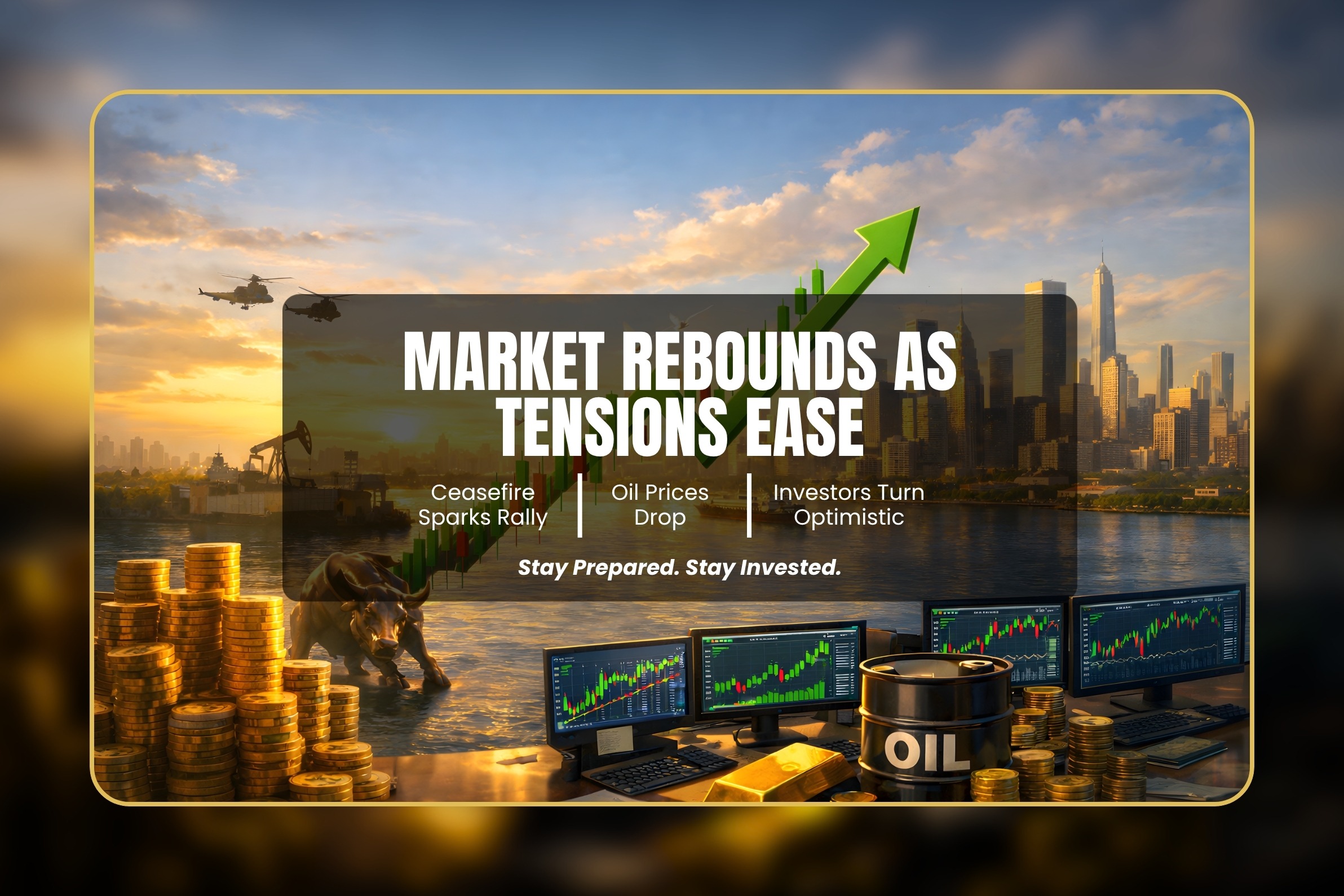
Global markets found relief after tensions eased with a temporary two-week ceasefire involving the United States, Iran, and Israel. This unexpected development quickly shifted investor sentiment from fear to optimism.
Stocks, which initially dipped due to escalating threats, recovered strongly by the end of the trading session. The momentum continued as markets reacted positively to the ceasefire announcement.
Oil Drops, Markets Jump
One of the biggest reactions came from oil markets. Prices dropped sharply as concerns over supply disruptions eased. This decline helped boost equities, with the S&P 500 showing strong upward movement.
At the same time:
- Safe-haven assets like gold gained traction
- Bond yields declined
- Expectations of interest rate cuts increased
This combination created a favorable environment for investors in the short term.
2. Oil Prices Are Rising — But Stocks Are Ignoring It
Oil prices have crossed $113 per barrel, which usually signals risk in the global economy.
But here’s the interesting part:
- Oil traders are reacting quickly to tension
- Stock market investors are staying optimistic
This shows that equity investors believe the situation might be temporary and not damage long-term growth.
Strong Economic Signals Continue
Despite global tensions, the U.S. economy continues to show resilience.
Key highlights:
- Core durable goods orders are rising steadily
- Business investments remain strong
- Capital goods shipments (a key growth indicator) are improving
These signals suggest that companies are still confident and actively investing, supporting overall economic stability.
Insider Confidence Adds Strength
Another encouraging sign is the rise in insider buying. Corporate leaders—who understand their businesses best—are increasing their investments in their own companies.
This trend often reflects:
- Confidence in future growth
- Positive internal outlook
- Strong long-term fundamentals
Inflation May Rise—But Only Temporarily
Short-term inflation is expected to spike due to recent geopolitical disruptions.
However:
- Core inflation (excluding food & energy) remains stable
- The spike is likely temporary
- Central banks are expected to look beyond it
If inflation stabilizes, the Federal Reserve may move forward with interest rate cuts later this year.
Supply Chain Concerns Still Exist
Even with the ceasefire, global supply chains are not fully back to normal.
Challenges include:
- Delays in oil and gas production recovery
- Increased transportation costs
- Potential pricing pressure on goods
These factors may continue to influence markets in the coming months.
Investment Strategy: Stay Positive, Stay Prepared
While the overall outlook remains positive, uncertainty hasn’t disappeared.
A balanced approach is key:
- Stay invested to benefit from market growth
- Maintain higher cash levels for opportunities
- Be ready for short-term volatility
Final Thoughts
The worst-case scenario appears to be avoided—for now. Markets have responded positively, and economic fundamentals remain strong.
However, the global situation is still evolving. Investors should remain optimistic but cautious, using this phase to build wealth while staying prepared for unexpected changes.
February 14, 2025 05:07:00am
TradingView is a highly popular financial charting platform that caters to trade...
September 07, 2024 18:19:52pm
The energy industry remains crucial to the global economy, with traditional sect...


April 10, 2026 11:59:13am

April 08, 2026 12:55:40pm
April 02, 2026 09:11:28am
 en
en es
es th
th vi
vi zh
zh