
AI Euphoria, Rising Risks, and the Lessons Investors Shouldn't Ignore

AI Euphoria, Rising Risks, and the Lessons Investors Shouldn't Ignore

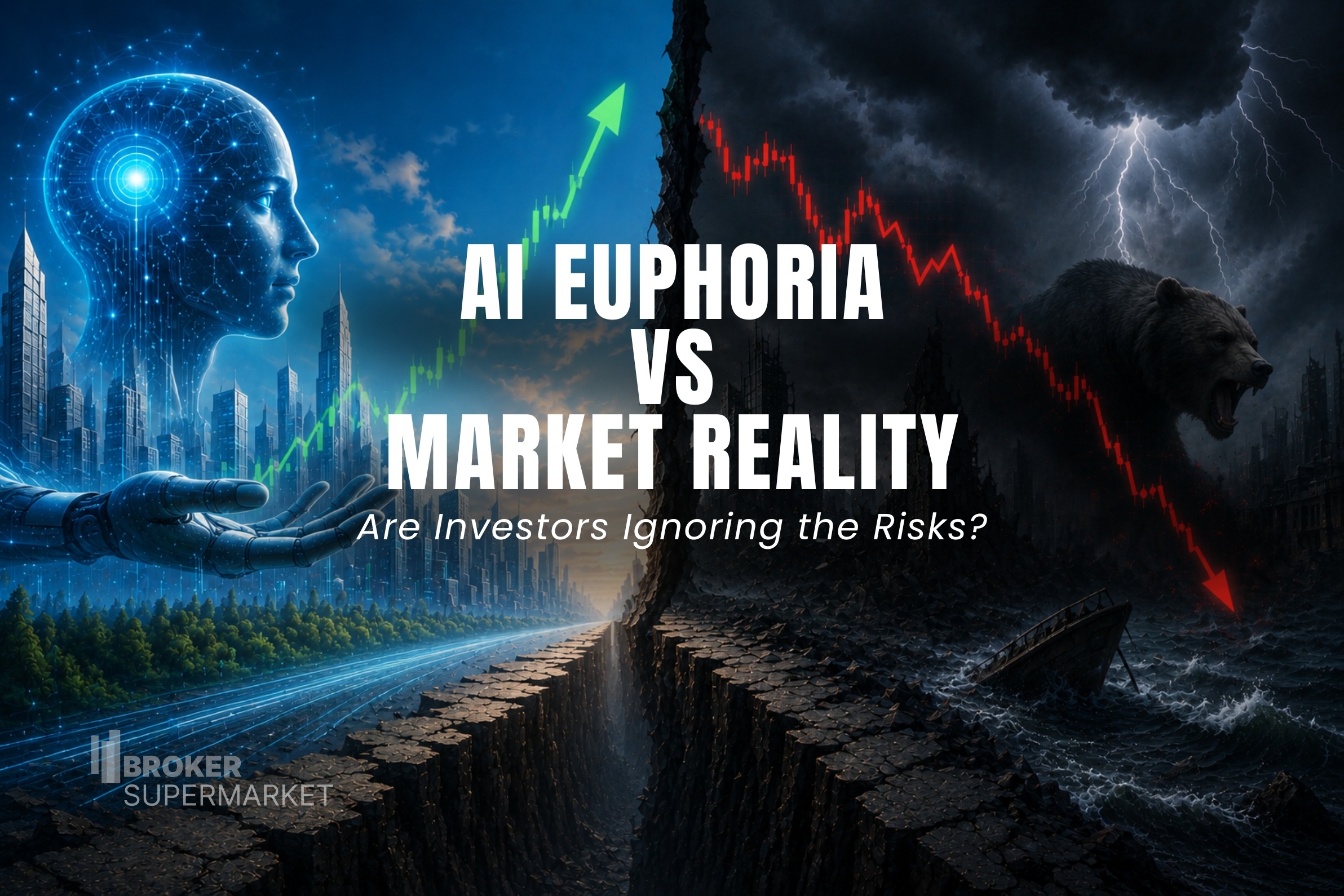
Financial markets have always been driven by a powerful combination of innovation and optimism.
From the internet boom of the late 1990s to today’s artificial intelligence revolution, investors have repeatedly been drawn to technologies that promise to reshape the future. While innovation creates enormous opportunities, history also reminds us that excessive enthusiasm can push valuations far beyond reality.
Today, many market observers are beginning to ask an important question:
Are investors becoming too optimistic too quickly?
The New Market Obsession
Artificial intelligence has become the dominant theme in global markets.
Companies announcing AI initiatives often experience immediate investor interest, regardless of how significant those initiatives are to their actual business performance. The excitement has expanded beyond technology stocks and is now influencing industries ranging from infrastructure and semiconductors to telecommunications and even space-related businesses.
The result is a growing number of companies trading at valuations that appear disconnected from their current revenues, earnings potential, and long-term fundamentals.
While investors are focusing on future possibilities, markets may be paying less attention to present realities.
When Optimism Becomes Speculation
Every major investment cycle has a point where enthusiasm begins to outweigh fundamentals.
In periods of strong market momentum, investors often become willing to pay increasingly higher prices based on expectations rather than proven results. While this can drive impressive gains in the short term, it also increases vulnerability if growth expectations fail to materialize.
The challenge is not identifying revolutionary technologies.
The challenge is determining whether current valuations already assume years of future success.
History shows that companies can be transformative and still become poor investments if investors pay too much for future growth.
Why Today’s Environment Deserves Attention
The current market environment is unique because enthusiasm for innovation is colliding with several macroeconomic challenges.
Among the most significant are:
- Rising energy prices
- Persistent inflation pressures
- Higher interest rates
- Ongoing geopolitical uncertainty
- Slowing consumer purchasing power
Individually, each of these factors can influence market performance. Together, they create a backdrop that deserves careful monitoring.
While investors remain focused on growth opportunities, economic conditions are becoming increasingly complex.
The Inflation Challenge Isn’t Over
Many investors expected inflation to continue easing throughout the year.
However, rising energy costs and ongoing supply disruptions are creating new inflationary pressures across the global economy.
Higher transportation costs, increasing production expenses, and elevated commodity prices often take time to filter through to consumers. When they do, businesses face margin pressure while households experience reduced spending power.
This can slow economic activity and make future growth harder to sustain.
Why Interest Rates Matter More Than Ever
Interest rates play a critical role in determining how markets value future growth.
When rates rise, future earnings become less valuable in today’s terms. This is particularly important for high-growth companies whose valuations depend heavily on profits expected years into the future.
For this reason, speculative sectors often become more sensitive to rising rates than mature businesses with stable cash flows.
Investors who ignore this relationship may underestimate how quickly sentiment can change.
A Narrow Foundation for Economic Growth
Another trend worth watching is the concentration of economic strength.
Growth is increasingly being supported by a limited number of sectors and income groups. While certain industries continue to thrive, many households are facing higher living costs, increased debt burdens, and reduced purchasing power.
A healthy economy typically benefits from broad participation.
When growth depends too heavily on a small portion of the economy, resilience can become a concern.
What Traders and Investors Should Watch Next
Rather than focusing solely on market headlines, investors should monitor indicators that reveal how conditions are evolving beneath the surface.
Key areas include:
- Inflation trends
- Energy prices
- Interest rate expectations
- Consumer spending data
- Corporate earnings guidance
- Market valuation levels
These indicators often provide early signals about shifts in sentiment and market direction.
Staying Disciplined in an Emotional Market
Markets often become most dangerous when confidence is highest.
That does not mean a correction is imminent. It simply means that investors should remain disciplined and avoid allowing excitement to replace analysis.
Periods of strong momentum can last longer than expected. However, long-term success is rarely achieved by chasing trends alone.
The most successful investors balance opportunity with risk management.
The Bottom Line
Artificial intelligence may prove to be one of the most important technological developments of our generation.
But history teaches us that even transformative innovations experience periods of excessive optimism.
As valuations rise and macroeconomic risks build, investors should focus not only on future potential but also on present realities.
The goal isn’t to fear innovation.
It’s to recognize when excitement begins to outrun fundamentals.
Final Insight
Great technologies can change the world. Great investments still depend on price, timing, and discipline.
In today’s market, understanding that difference may be more important than ever.

September 16, 2026 09:12:38am

September 08, 2026 06:57:20am

September 02, 2026 08:40:28am

July 23, 2026 05:50:18am
February 14, 2025 05:07:00am
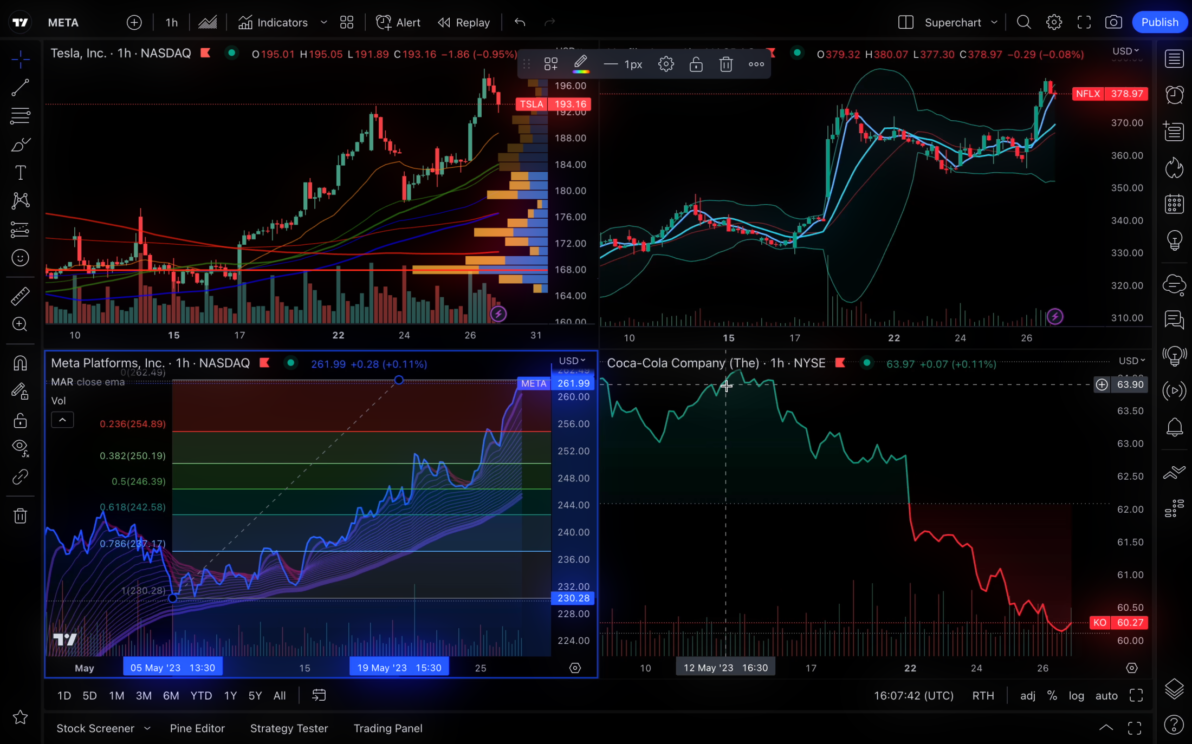
TradingView is a highly popular financial charting platform that caters to trade...

August 27, 2026 10:22:44am
August 19, 2026 12:24:43pm

August 12, 2026 07:33:28am
 en
en es
es th
th vi
vi zh
zh