
Information vs Knowledge: Why Smart Traders Don't Follow Every Market Headline

Information vs Knowledge: Why Smart Traders Don't Follow Every Market Headline

Introduction
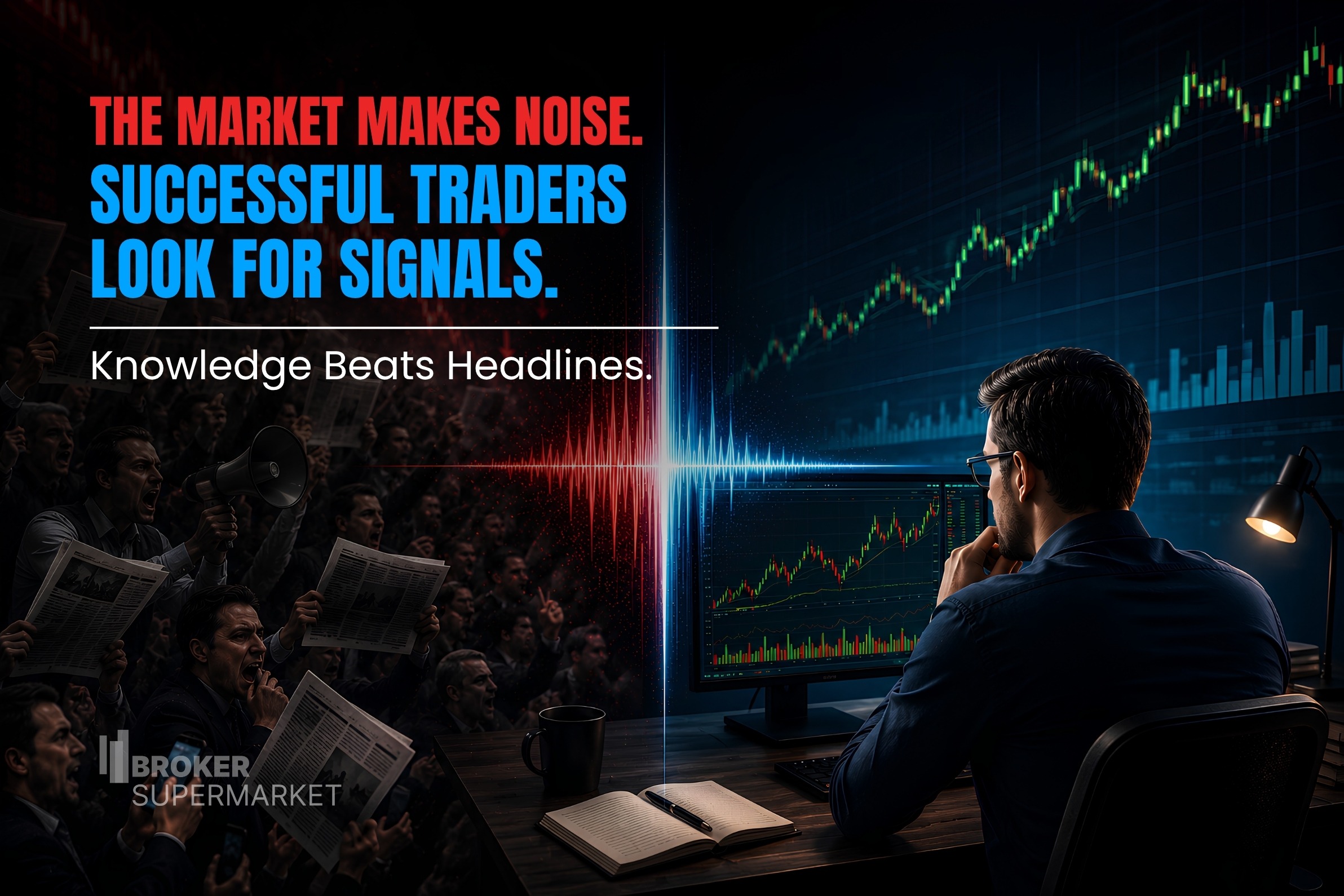
Financial markets never stop moving.
Every day brings breaking news, expert opinions, economic reports and market predictions. For many new traders, it can feel as though every headline requires immediate action.
The truth is very different.
Successful trading isn’t about consuming more information—it’s about understanding which information actually matters.
Knowing how to filter market noise and focus on relevant insights is one of the most valuable skills a trader can develop.
More Information Doesn’t Always Mean Better Decisions
Modern traders have access to more information than ever before.
Financial news websites, economic calendars, social media platforms, trading communities and AI-powered tools provide a constant stream of updates.
While staying informed is important, reacting to every headline can often lead to emotional decisions rather than strategic ones.
Successful traders focus on quality rather than quantity.
Market Noise Can Influence Emotions
When traders constantly monitor every market update, they may experience:
-
- Fear of missing out (FOMO)
-
- Emotional buying and selling
-
- Overtrading
-
- Reduced confidence
-
- Difficulty following a trading plan
Instead of reacting to every market movement, experienced traders rely on preparation and discipline.
Build Knowledge Instead of Following Hype
Knowledge is built through understanding.
Instead of asking:
“What is happening today?”
Ask:
“Why is this happening, and does it affect my trading strategy?”
This simple shift in thinking helps traders make decisions based on analysis rather than emotion.
Learn Before You React
Before entering any trade, consider:
-
- Does this news affect my market?
-
- Is this a short-term reaction or a long-term trend?
-
- Does it align with my trading plan?
-
- Have I considered the risks?
These questions encourage thoughtful decision-making and reduce impulsive trading.
The Role of Broker Research
Trading isn’t only about analysing markets.
Choosing the right broker also plays an important role.
Before opening an account, compare:
-
- Regulation
-
- Trading platform
-
- Trading costs
-
- Available markets
-
- Educational resources
-
- Customer support
A reliable broker supports better trading decisions through useful tools and resources.
Quality Over Quantity
Professional traders rarely make decisions based on a single headline.
Instead, they combine:
-
- Market analysis
-
- Risk management
-
- Broker research
-
- Trading discipline
-
- Continuous learning
This balanced approach helps create consistency over time.
Key Takeaways
-
- Not every headline requires action.
-
- Knowledge is more valuable than information alone.
-
- Emotional decisions often lead to unnecessary risks.
-
- A trading plan provides structure during volatile markets.
-
- Learning and broker comparison remain essential before placing trades.
Conclusion
The financial markets will always generate news.
The difference between experienced traders and beginners is not who reads the most headlines—it’s who understands which information matters.
At Broker Supermarket, our goal is to help traders move beyond market noise by providing educational content, broker comparisons and practical insights that support better trading decisions.
October 07, 2026 06:59:36am

September 29, 2026 12:01:47pm
September 16, 2026 09:12:38am

September 08, 2026 06:57:20am

September 02, 2026 08:40:28am
August 27, 2026 10:22:44am
August 19, 2026 12:24:43pm

August 12, 2026 07:33:28am
 en
en es
es th
th vi
vi zh
zh